
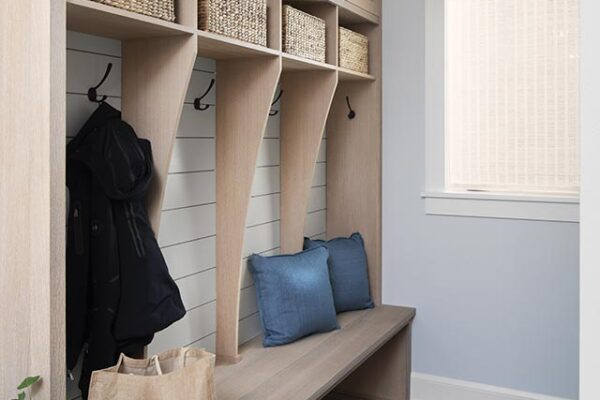
In Wisconsin, an entryway isn’t just a transition space. It’s a hardworking buffer between the outdoors and the comfort of your home. Snow, slush, salt, wet boots, heavy coats, and temperature swings all hit this area first. When entryways aren’t designed intentionally, the mess, drafts, and frustration show up fast.
A well-designed entryway doesn’t just look good. It protects the rest of the house, simplifies daily routines, and quietly improves how your home functions all winter long.
The Entryway Is Your Home’s First Line of Defense
Wisconsin winters demand more from a home, and the entryway carries a big part of that load. Without proper planning, cold air rushes in every time the door opens, moisture spreads into living areas, and clutter piles up.
Thoughtful entryway design helps:
- Reduce heat loss during cold months
- Contain snow, salt, and moisture
- Create an organized place for winter gear
- Improve long-term durability of floors and finishes
This is especially important in custom homes, where layout and materials can be tailored to the realities of daily life, not just aesthetics.
Mudrooms Matter More Than Most People Think
One of the most effective ways to manage winter wear and tear is through a dedicated mudroom or well-planned entry zone. Whether it’s a spacious mudroom off the garage or a compact drop zone near the front door, the goal is the same: keep winter contained.
High-performing entry spaces often include:
- Built-in benches for removing boots comfortably
- Durable flooring that handles water and grit
- Hooks and cubbies for coats, hats, and bags
- Storage designed around real winter gear, not just décor
Renz Construction frequently designs entryways that balance form and function, ensuring these spaces feel intentional rather than like an afterthought. You can see how this philosophy carries through the entire build process on our Custom Homes page.
Material Choices Make or Break Winter Performance
Not all materials are created equal, especially in entryways. Wisconsin winters are hard on surfaces, and choosing the wrong finishes can lead to premature wear, staining, or damage.
Smart material choices include:
- Porcelain or ceramic tile with slip resistance
- Engineered wood or stone with proper sealing
- Moisture-resistant trim and wall finishes
- Durable door systems with strong weather sealing
According to the U.S. Department of Energy, properly sealed doors and insulated entry points significantly reduce heat loss and improve energy efficiency in cold climates. This reinforces the importance of designing entryways that perform just as well as they look.
Layered Entry Design Improves Comfort
Luxury in a Wisconsin home often shows up in subtle ways. One of those is layered entry design. Features like vestibules or secondary doors create an extra barrier between indoors and outdoors, minimizing drafts and improving comfort throughout the home.
These design choices help:
- Stabilize indoor temperatures
- Reduce strain on heating systems
- Improve overall energy efficiency
- Create a quieter, calmer interior
These details aren’t flashy, but they contribute to a home that feels solid and comfortable no matter the weather.
Planning for Winter Doesn’t Mean Sacrificing Style
An entryway can be both beautiful and practical. Clean lines, warm materials, thoughtful lighting, and quality craftsmanship elevate these spaces beyond utility. When designed well, entryways feel welcoming instead of cluttered, even on the snowiest days.
This balance of craftsmanship and livability is part of Renz Construction’s broader commitment to building homes that work in real life. Our approach to quality, durability, and long-term thinking is outlined on Our Promise page:
A Small Space With a Big Impact
Entryways may not be the largest part of a home, but in Wisconsin, they’re among the most important. A well-designed entry space protects your investment, supports daily routines, and keeps winter where it belongs: outside.
When building custom, designing for climate isn’t a limitation. It’s an opportunity to create a home that feels comfortable, organized, and resilient season after season.